Classic Congenital Adrenal Hyperplasia due to 21-Hydroxylase Deficiency (classic CAH due to 21-OHD) affects the adrenal glands. The adrenal glands make different hormones, such as cortisol (the body's natural steroid which helps the body deal with stress and illness), aldosterone (helps regulate salt and water levels) and androgens (male sex hormones).
Classic CAH due to 21-OHD occurs when an enzyme called "21-hydroxylase" (21-OH) is either absent or not functioning properly. A person who has classic CAH due to 21-OHD does not make enough cortisol and aldosterone, and makes too many androgens. Lacking cortisol and aldosterone means that the body is less able to cope with stress, and can be life-threatening. Too much androgens cause male characteristics to appear early in boys, or inappropriately in girls.
.png)
The original graphic is converted into the following text version for your easy access to the information.
Classic congenital adrenal hyperplasia due to 21-hydroxylase deficiency (CAH due to 21-OHD)
The adrenal glands are important endocrine organs in our body. They are located on the top of both kidneys. When functioning normally, adrenal glands will use the 21-OH enzyme to produce normal amount of different hormones, including cortisol, aldosterone and androgens for normal health and sexual development. In people with classic CAH due to 21-OHD, the 21-OH enzyme is either missing or not working properly, making the secretion of cortisol and aldosterone decrease and will cause multiple health problems. Besides, it also increases the production of androgens, causing genital changes and early puberty.
Everybody has two copies of genes, one from each parent, which tell the body how to make specific enzymes.
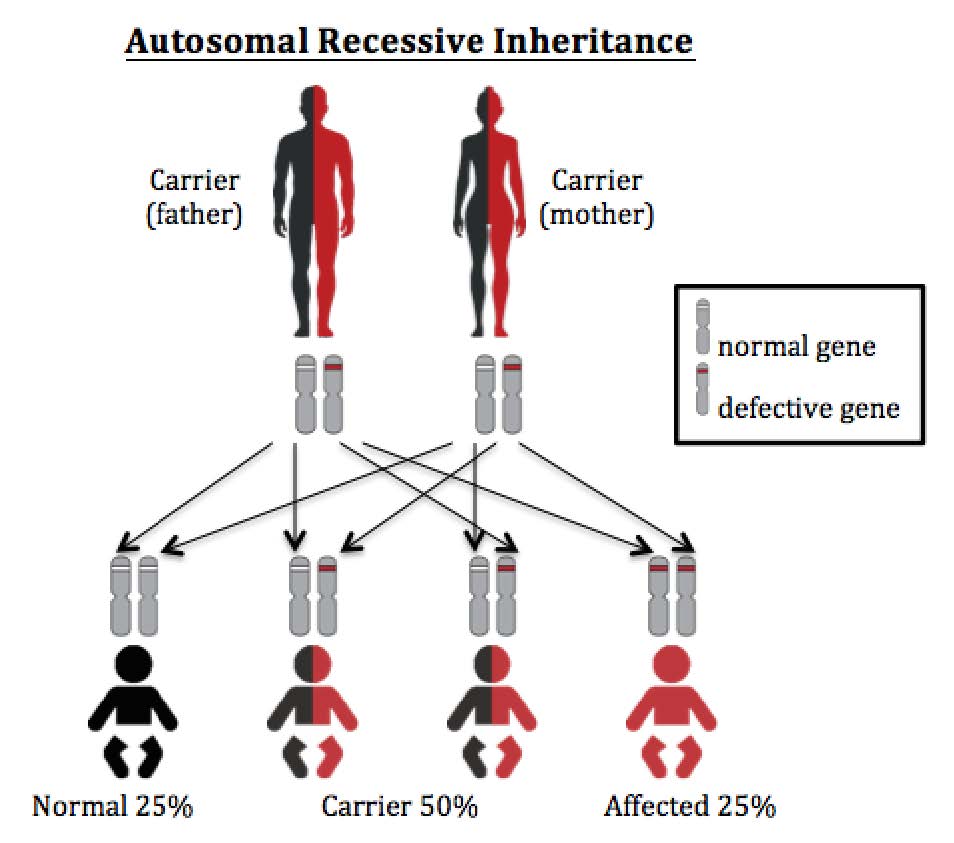
Classic CAH due to 21-OHD is an autosomal recessive disease. Only when babies inherit two faulty copies of the gene for classic CAH due to 21-OHD from parents, the enzyme made does not work properly or is not even made at all.
The original graphic is converted in to the following text version for your easy access to the information.
Autosomal recessive inheritance
In autosomal recessive diseases, people with two faulty copies of gene (one from father and one from mother) will develop symptoms. People with only one faulty copy of gene are be normal and they are called disease carriers.
Classic CAH due to 21-OHD is inherited in autosomal recessive manner. If both parents are classic CAH due to 21-OHD carriers, for each pregnancy (no matter it is a baby boy or girl), there is a 25% (1 in 4) chance that the child has 2 copies of normal gene (who is not affected), a 50% (1 in 2) chance that the child has one normal and one faulty gene who is a carrier like the parents, and a 25% (1 in 4) chance that the child has two copies of faulty gene who is at risk for classic CAH due to 21-OHD.
Each baby with classic CAH due to 21-OHD may have different clinical presentations. There are three main forms, which includes:
Both salt-wasting classic form and simple virilising form may present at birth, as excessive male hormones are made by the fetus and causes the genitals of female fetuses to develop male-like features.
Non-classic form can manifest in childhood or later in life with symptoms of excessive male hormones such as early puberty, acne, excess hair growth, and menstrual irregularities.
Babies with classic CAH due to 21-OHD benefit significantly from early treatment and can have active lives. Affected children are cared for by a multidisciplinary team which includes doctors who specialized in hormones and surgeons.
Oral medications to replace and mimic the body's normal cortisol and aldosterone levels and will be required lifelong. Some females with classic CAH due to 21-OHD may require surgery to correct their masculinized genitalia.
Cortisol is a stress hormone and is increased naturally when the body is under period of stress, such as during illness and surgery. In children with classic CAH due to 21-OHD, their bodies cannot produce cortisol adequately, therefore replacement oral medications will have to be increased during illness. Your doctor will advise you what to do when your child is sick. It is very important to work out with your doctor a care plan.
If you are worried that your baby is ill, it is important to follow medical advice. Bring your baby to your local accident and emergency department immediately. Take any information that you have been given about classic CAH due to 21-OHD, including this pamphlet, to the hospital with you.
For general queries on Newborn Screening Programme for Inborn Errors of Metabolism, please call 5741 4280 (Department of Clinical Genetics, Hospital Authority)
March 2026
Hospital Authority